Key takeaways
- Stationary vs rolling capacity — most racks support noticeably less weight while being moved than while sitting still; check both numbers, not just one.
- Steel tubing gauge — thicker tubing on premium racks sags less under a full load over months of use.
- Caster quality — commercial-grade locking casters on premium racks hold up better to repeated rolling than basic budget wheels.
- Modularity — premium modular systems let you reconfigure shelves and rods as storage needs change, which fixed budget racks don’t offer.
Garment racks range from around $30 to well over $150, and weight capacity is the main thing that scales with price — along with wheel quality and how much the frame flexes or sags when it’s fully loaded over time. Here’s the real difference between the tiers.
Best Budget Garment Racks
Amazon Basics Adjustable Double Rod Rolling Garment Rack
A consistently top-rated value pick with a 400 lb stationary weight capacity and tool-free assembly — a solid choice for closet overflow, a seasonal clothing swap, or a temporary setup during a move.
HYSEYY Double Rod Garment Rack
A frequent Amazon best-seller in this category, with locking 360-degree wheels that matter directly if you’re rolling a fully loaded rack across a room rather than leaving it stationary.
Whitmor Supreme Garment Rack
A long-running chrome-steel rack with a single hanging rod and top/bottom shelves, height-adjustable in 1-inch increments — a simpler single-rod layout than the double-rod racks above, which suits long items like dresses and coats better than a double rod does.
Best Premium Garment Racks
HOKEEPER Commercial Garment Rack
A 75-inch-wide rack with roughly 525 lb capacity, built more like the racks used by boutiques or event planners than a typical home closet rack — overkill for light home use, but genuinely built for it if you need that capacity.
VIPEK V5 Modular Garment Rack
A modular system supporting up to around 890 lbs across multiple hanging rods and shelves, aimed at people effectively building a freestanding closet system rather than buying a single rolling rack.
What the Price Difference Buys
- Stationary vs rolling capacity — most racks support noticeably less weight while being moved than while sitting still; check both numbers, not just one.
- Steel tubing gauge — thicker tubing on premium racks sags less under a full load over months of use.
- Caster quality — commercial-grade locking casters on premium racks hold up better to repeated rolling than basic budget wheels.
- Modularity — premium modular systems let you reconfigure shelves and rods as storage needs change, which fixed budget racks don’t offer.
Budget racks are genuinely fine for normal home use — a standard closet’s worth of clothes won’t approach their weight limits. Premium racks earn their price when you need heavier-duty steel tubing, locking commercial-grade casters, or a modular frame you can reconfigure as storage needs change over time.
Single Rod vs. Double Rod, and Protecting What’s Hanging
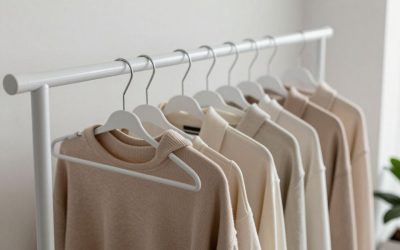
Rod configuration matters as much as weight capacity for day-to-day use. A single-rod rack gives full-length hanging clearance for dresses, coats, and long garments that would otherwise bunch up or drag on a lower rod in a double-rod layout. A double-rod rack roughly doubles hanging capacity in the same floor footprint, but only works well for shorter items — shirts, folded pants on hangers — since anything long enough to reach the bottom rod will snag. Whichever layout you pick, an open garment rack leaves clothes exposed to dust and sunlight in a way a closet doesn’t; a fabric garment rack cover (sold separately for most rack sizes) is a cheap way to close that gap if the rack is going in a room rather than inside an existing closet.
A note on how this guide was put together: these picks are based on published specs, pricing, and patterns across current 2026 buying guides and Amazon listings — not independent lab testing by this site. Prices and availability can shift, so it’s worth double-checking current listings before buying.
Frequently Asked Questions
Will a budget garment rack sag under a full closet’s worth of clothes?
Most won’t, since typical home closets don’t approach a 400 lb capacity — sagging tends to show up with heavier commercial use or very long-term, uneven loading rather than normal household use.
Is a modular garment rack worth it over a fixed double-rod rack?
Mainly if your storage needs change — moving, seasonal swaps, or adding shelving later. For a stable, permanent setup, a fixed double-rod rack is simpler and usually cheaper for the same practical capacity.
Do garment racks need a cover to protect clothes from dust?
If the rack sits in a bedroom or living space rather than a closed closet, yes — a cover meaningfully cuts down on dust settling onto hanging clothes and offers some protection from direct sunlight fading fabric over time.
How much floor space does a garment rack actually need?
A standard double-rod rolling rack typically needs about 3 feet of width and 1.5-2 feet of depth, plus a little clearance on each side to swing hangers past each other without snagging. Measuring the intended spot before ordering avoids the common problem of a rack that’s too wide for the gap between a bed and a wall.







Write Your Review
No reviews yet. Be the first to share your experience!