Key takeaways
- Tank size and run time — premium units often run 1.5-2x longer between refills than budget models.
- Noise level — more expensive motors and fan designs tend to run quieter at comparable mist output, which matters directly for bedroom use overnight.
- Smart/auto controls — app control and auto-humidity shutoff are increasingly common even at the budget tier now, but tend to be more reliable and precise on premium models.
- Build materials — better plastics and components resist mineral buildup and mold slightly longer, though this depends heavily on cleaning habits regardless of price.
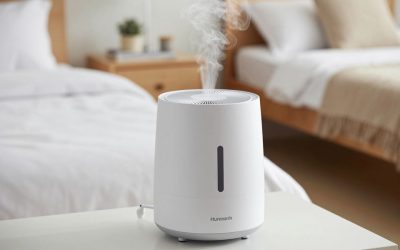
Humidifiers range from under $40 to well over $200, and the price difference isn’t just marketing — it shows up in tank size, run time, smart controls, noise level, and how much maintenance the unit actually needs over time. Here’s what you get at each tier, and who each tier actually makes sense for.
Best Budget Humidifiers
Vicks Warm Mist Humidifier
A no-frills warm-mist humidifier that’s been a budget staple for years; simple dial control, easy to refill, and a reasonable pick for a single bedroom if you don’t need smart features or app control.
Dreo HM311S 4L Smart Humidifier
A feature-rich budget pick covering roughly 300 square feet with up to around 40 hours of run time per fill, plus app control — unusual feature density for the price point, closing much of the gap with pricier smart humidifiers.
Honeywell HCM350 Cool Mist Humidifier
An evaporative humidifier rather than an ultrasonic one — it uses a wicking filter and fan instead of vibrating the water into a fine mist, which means it can’t over-humidify a room the way ultrasonic units sometimes do, and it doesn’t leave the white mineral dust on furniture that ultrasonic models can produce with hard tap water.
Best Premium Humidifiers
Levoit Superior 6000S
A large-tank, large-room humidifier built for whole-bedroom or open-floor-plan coverage, with more precise humidity targeting and quieter operation at higher mist output than entry-level models typically manage.
Honeywell Designer Series Humidifier
Positioned as a furniture-grade option — the design and build quality are as much of the upgrade here as raw performance, aimed at people who don’t want a humidifier that visibly looks like a plastic appliance on a nightstand.
What the Price Actually Buys
- Tank size and run time — premium units often run 1.5-2x longer between refills than budget models.
- Noise level — more expensive motors and fan designs tend to run quieter at comparable mist output, which matters directly for bedroom use overnight.
- Smart/auto controls — app control and auto-humidity shutoff are increasingly common even at the budget tier now, but tend to be more reliable and precise on premium models.
- Build materials — better plastics and components resist mineral buildup and mold slightly longer, though this depends heavily on cleaning habits regardless of price.
Regardless of tier, humidifiers need regular cleaning — mineral deposits and mold buildup are the most common complaint across both budget and premium models in long-term reviews, and skipping maintenance is what actually shortens a humidifier’s useful life, not the price you paid for it.
Ultrasonic vs. Evaporative: The Other Decision
Price tier aside, humidifiers also split by how they turn water into mist, and that matters as much as tank size. Ultrasonic models vibrate water into a fine mist at high frequency — they’re quieter and run without a replaceable filter, but with hard or untreated tap water they can leave a visible white mineral dust on nearby furniture and electronics, and it’s easier to accidentally over-humidify a small room with one. Evaporative models pull air through a wet wick with a fan, which self-regulates somewhat since output drops as room humidity rises, and they don’t produce mineral dust — the trade-off is a replaceable wicking filter that needs periodic swapping, and slightly more audible fan noise than a silent ultrasonic unit. Filtered or distilled water reduces mineral buildup in either type, but it’s a bigger factor for ultrasonic models specifically.
A note on how this guide was put together: these picks are based on published specs, pricing, and patterns across current 2026 buying guides and Amazon listings — not independent lab testing by this site. Prices and availability can shift, so it’s worth double-checking current listings before buying.
Frequently Asked Questions
Is a more expensive humidifier actually healthier to use?
Not inherently — a cheap humidifier that’s cleaned regularly is safer than an expensive one that isn’t. Price mainly buys convenience features (tank size, app control, noise level) rather than a fundamentally different health outcome.
How big a room can a budget humidifier actually cover?
Most budget units are rated for roughly 250-300 square feet — fine for a single bedroom, but undersized for an open-plan living area or a larger primary bedroom, where a premium large-tank model will perform noticeably better.
Why does my humidifier leave white dust on furniture?
That’s mineral residue from tap water, and it’s specific to ultrasonic models — the vibration turns dissolved minerals into airborne particles along with the water vapor. Switching to distilled or filtered water largely eliminates it; an evaporative humidifier avoids the issue entirely since its wicking filter traps most minerals before they become airborne.
How often should the tank actually be cleaned?
Every 3 days during regular use is the common recommendation across manufacturer manuals, with a deeper descale (vinegar or a manufacturer-approved descaling solution) weekly. Stagnant water left sitting more than a day or two is what actually grows mold and bacteria inside the tank, regardless of how much the humidifier itself cost.



Write Your Review
No reviews yet. Be the first to share your experience!